


By Remi Ogunpitan
For more than three decades I have had the privilege of building media and production businesses in Nigeria, watching some succeed beyond expectation, helping others recover from failure, and learning that sustainable enterprises are rarely created by funding alone.
They are built through patient investment, sound governance, strong infrastructure and, above all, a clear understanding of how value is created over time.
It is from that perspective that the growing conversation around Nigeria’s creative economy is viewed with both optimism and concern.
Hardly a month passes without another announcement of a major intervention. Governments unveil ambitious initiatives. African financial institutions commit sizeable resources.
Development partners, multilateral agencies and international foundations speak of unlocking the potential of Nigeria’s creative industries.
The figures are impressive and the ambition is commendable.
Yet, when one looks beyond the headlines, the transformation many expected remains difficult to see.
The question is not whether money is being committed. It clearly is. The more important question is whether those investments are being directed towards building an industry or merely funding activity.
Nigeria has never lacked creative talent. Our musicians command global audiences. Our filmmakers tell compelling stories. Our photographers, designers, producers, editors and digital creators continue to demonstrate remarkable ingenuity despite enormous constraints.
Talent has never been our greatest challenge. Our challenge has been building businesses around that talent.
Seems most of our investment ecosystem remains focused on helping people create content, while too little is directed towards the infrastructure that enables content to become enduring commercial assets.
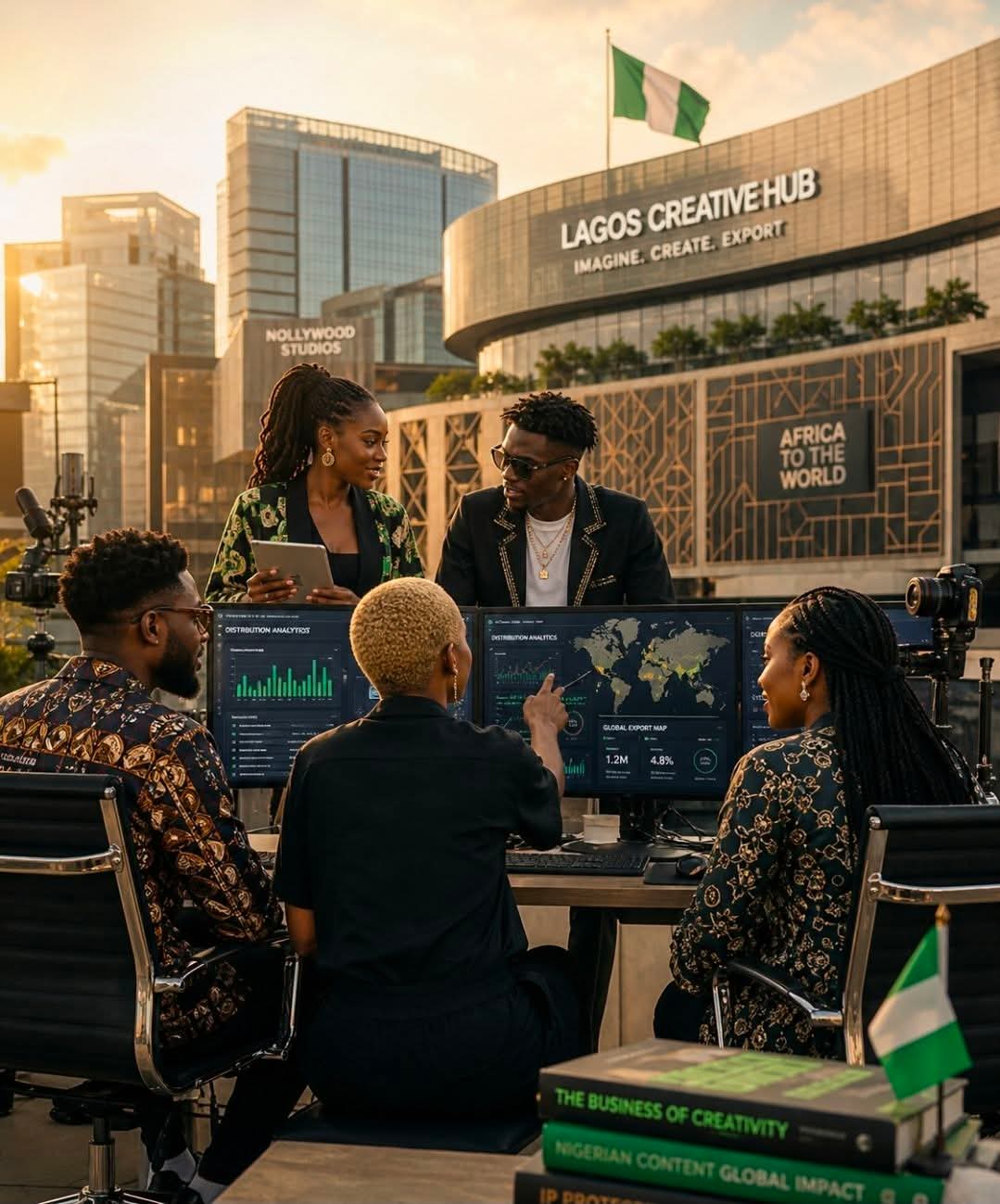
Studios, post-production facilities, media technology, archives, distribution platforms, intellectual property management, audience measurement, cloud production, data analytics and international sales capability receive far less attention than they deserve.
A creative industry becomes economically significant not because it produces more films, songs or social media content, but because it creates intellectual property that continues to generate value for decades.
Equally concerning is that many interventions measure success by inputs rather than outcomes.
We count grants awarded, workshops delivered, people trained and programmes launched. We speak less often about businesses that have survived ten years, exports that have grown, intellectual property that has appreciated in value or companies that have become globally competitive.
The absence of these measures makes it difficult to know whether we are building an ecosystem or simply financing a succession of well-intentioned projects.
There is also an uncomfortable truth that deserves greater discussion. Many of the businesses expected to drive this sector remain undercapitalised, informal and structurally weak.
Financial institutions naturally struggle to invest at scale where governance, audited accounts, predictable revenues and long-term business models are absent.
This creates a cycle in which funding remains fragmented because scalable enterprises are too few, while scalable enterprises remain too few because the ecosystem has not been designed to help them mature.
If we genuinely intend to make the creative economy a pillar of national development, the conversation must evolve.
We should invest less in isolated projects and more in permanent capability.
We need world-class production infrastructure, stronger copyright enforcement, professional business development, export support, technology adoption, audience research, intellectual property financing and institutions that enable creative businesses to grow from small enterprises into enduring companies.
The future of Nigeria’s creative economy will not be secured solely by exceptional artists. It will be secured by exceptional enterprises that create, own, distribute, protect and commercialise creative intellectual property at scale.
After more than thirty-five years in business, I remain convinced that sustainable industries are not built on announcements. They are built on systems.
Nigeria possesses the talent, the entrepreneurial spirit and the market to become one of the world’s leading creative economies. What we now require is the discipline to invest in the structures that will allow that potential to endure for generations.
PS: As seen on Facebook


