
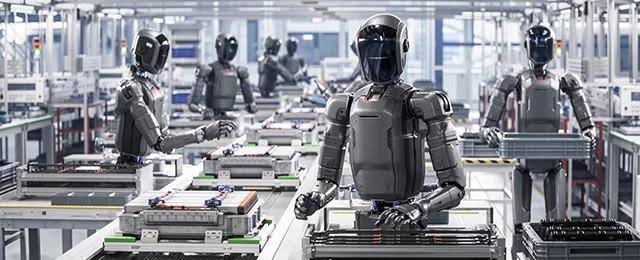
The global market for general-purpose robots is poised for explosive growth, with consulting firm McKinsey projecting it could expand from less than $1 billion today to about $370 billion by 2040 as advances in artificial intelligence (AI) accelerate the adoption of intelligent machines.

According to McKinsey, the next generation of AI-powered robots is moving beyond factories into workplaces, hospitals and homes, where they are expected to work alongside humans rather than simply perform repetitive industrial tasks.
McKinsey Partners Ani Kelkar, Christian Jansen and Zina Cole said breakthroughs in AI, sensing technologies and computing have significantly expanded what robots can do. They noted that the industry’s biggest challenge is no longer technical feasibility but creating effective collaboration between humans and machines.
The firm said the projected $370 billion market opportunity depends on continued improvements in mobility, safety, battery performance and affordability, which would enable robots to transition from small-scale pilot projects to widespread commercial deployment.
Beyond industrial settings, AI-powered household robots are also becoming more sophisticated. Unlike traditional single-purpose devices such as robotic vacuum cleaners, the latest generation of robots is designed to move freely, hold conversations and interact naturally with people.
Reports indicate that consumers already form surprisingly strong emotional attachments to household robots. Some owners give their robotic devices names and even take them on vacations, while others have expressed grief when beloved robotic pets were discontinued.
As AI-enabled humanoid and companion robots become more common in homes, hospitals and care facilities, experts say issues such as cybersecurity, data privacy and consumer trust will become increasingly important.
McKinsey advised business leaders to begin preparing for broader robotics adoption by identifying high-value applications where intelligent robots can complement human workers, positioning their organisations to benefit from what could become one of the largest technology markets of the next decade.