


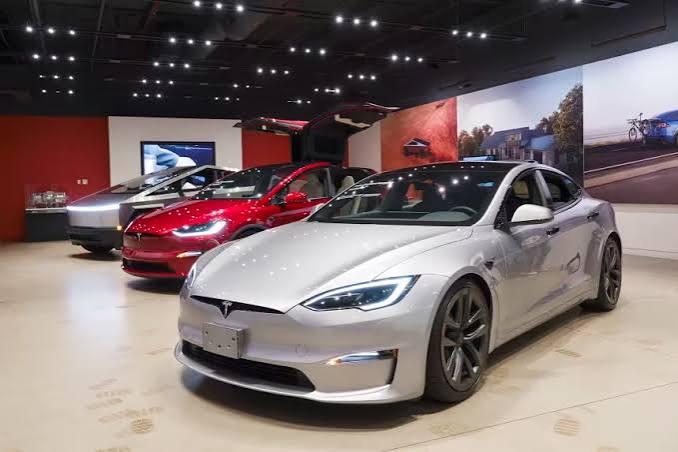
Tesla recorded a strong rebound in global vehicle sales during the second quarter of 2026, with deliveries rising 25 per cent year-on-year, signalling that the electric vehicle maker may be emerging from a prolonged slowdown.

The company delivered more than 480,000 vehicles between April and June, up from just over 384,000 in the same period last year. Tesla uses vehicle deliveries as a proxy for sales.
Although the company does not disclose regional sales figures, industry data suggests Europe played a pivotal role in the recovery.
Data from the European Automobile Manufacturers’ Association (ACEA) shows Tesla’s sales in Europe surged 77 per cent during the first five months of 2026.
The recovery follows a difficult 2025, when the company’s European sales plunged 38 per cent amid consumer backlash over Chief Executive Officer Elon Musk’s political activities, including his support for far-right political figures in Germany and the United Kingdom and his controversial role in the administration of US President Donald Trump.
Analysts say several factors have boosted Tesla’s fortunes this year, including rising fuel prices, government incentives for electric vehicles and easing public resistance to Musk’s political views.
“Europe is in bounce-back mode after suffering for a year from the anti-Musk sentiment that dominated the region,” said Dan Ives, Global Head of Technology Research at Wedbush Securities.
Tesla’s quarterly deliveries exceeded market forecasts, offering encouragement after the company recorded two consecutive years of annual sales declines.
Earlier in the week, analysts at Deutsche Bank had projected deliveries of about 416,000 vehicles, expecting overseas markets, particularly Europe, to account for most of the growth.
According to Seth Goldstein, Senior Equity Analyst at Morningstar, Tesla has regained market share in Europe as electric vehicles become increasingly competitive with petrol-powered cars.
He noted that expanding fast-charging infrastructure across highways and cities, combined with falling EV prices, should continue to support long-term demand.
Despite the improved performance, Tesla continues to face mounting pressure from Chinese electric vehicle manufacturers.
The company lost its position as the world’s largest EV maker to BYD last year, and the Chinese automaker continues to expand rapidly in international markets.
ACEA data shows BYD’s European sales climbed 159 per cent between January and May 2026, leaving it 12 per cent ahead of Tesla in the region after previously trailing the US automaker.
The growing success of Chinese brands highlights the increasingly competitive global EV market, where affordability and technological innovation are becoming key differentiators.
Tesla is also seeking growth beyond its core vehicle business by investing heavily in autonomous driving and artificial intelligence.
Last year, the company launched its robotaxi service in select markets using vehicles equipped with its Full Self-Driving (FSD) technology. However, the rollout has progressed more slowly than initially projected.
The company is also developing humanoid robots and has discontinued production of its premium Model S and Model X vehicles to free up manufacturing capacity for future projects.
While the robots have yet to reach the commercial market, Tesla views artificial intelligence and autonomous mobility as central pillars of its long-term strategy.
The strong second-quarter sales performance suggests the company may be regaining momentum after a challenging period, but sustaining that recovery will depend on its ability to fend off increasingly aggressive Chinese competitors while delivering on its ambitious technology roadmap.

